

Graffiti Removal Equipment
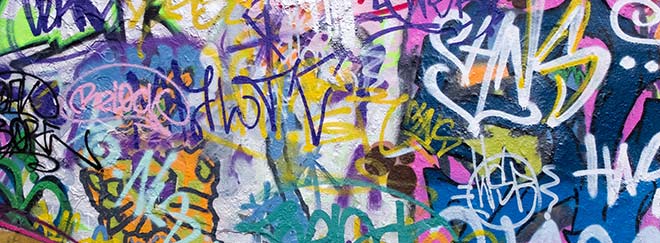
Graffiti is becoming more and more common and the COVID-19 pandemic has led to a new type of messaging, for example the posting of anti-vaccine messages. This can of course cause upset to people and may impact their behaviour, making them feel uncomfortable in some public places.
The presence of graffiti can also encourage other types of crime, so if your business premises have been targeted, you’ll want to know how to remove graffiti as quickly as possible.
Most graffiti is applied using spray paints or permanent marker pens which are usually solvent or petroleum based and the method of removal depends upon the surface to which it has been applied as well as the medium of the graffiti to be removed.
Graffiti removal can be an expensive business, costing Network Rail an estimated £5 million per year to remove and the estimated cost across the UK is said to be over £1 billion.
How to remove graffiti
Most graffiti takes more than soap and water to remove and you’re likely to need a removal agent containing chemicals such as turpentine, white spirit, naptha, alcohol (the non-drinkable type), acetone (as used in nail polish remover) or methylene chloride, often used in paint stripper. There are some less hazardous options e.g. a citrus based graffiti removal agent, but in most cases you’re likely to use a chemical-based graffiti cleaner to get the job done quickly and efficiently. This may carry safety risks for your operators, so protective clothing should be used to ensure minimal contact with liquid chemicals or fumes.
Care should be taken when choosing cleaning chemicals though, as some solvents could remove not only the graffiti but also the underlying surface finish and in extreme examples could melt certain plastic finishes. For health and safety reasons, extra precautions are needed when using chemicals in areas when people could pass by, so choosing the right type of cleaning equipment is important, particularly for larger areas and where you need to ensure that the cleaning solvent is removed thoroughly and safely.
Graffiti cleaning equipment available
We usually recommend using a hot water pressure washer for graffiti cleaning. Ideally one with controllable output, as too high a pressure can be harmful to some surfaces and could spread the chemicals into other areas. The sooner you act to remove graffiti the better, as the longer it is left on the surface, the harder it is to remove. In fact, if you’re able to act quickly – say within 48 hours, a hot water pressure washer can be effective in removing graffiti without chemicals. Here are some examples of pressure washers, which are suitable for a variety of cleaning tasks, including graffiti cleaning:
- MAC Zeus mobile pressure washer, diesel powered
- Karcher HDS 1000, which can be petrol or diesel powered, with a tubular frame
- Heavy Duty diesel and petrol driven trolley pressure washers
The Edge Steam Tec Graffiti, which is diesel powered, with its own water tank, and generates wet steam mixed with detergent.
If you don’t already have a hot water pressure washer, we think it’s a worthwhile investment for your business, as you can react to graffiti and other dirt or grime problems very quickly if the equipment you need is already on-site.
Chemicals for graffiti removal
As we’ve mentioned, in most cases you are likely to need to use chemicals. Typically you would brush the chemical onto the surface, leave it to soak in, agitate with a brush, then pressure wash it off. We can advise on and supply the appropriate chemicals to use with our cleaning equipment.
Hiring equipment to remove graffiti
For occasional requirements, you can hire cleaning equipment for just as long as you need it. For example, a trailer mounted pressure washer will enable you to cover a wide area and can be hired for short or longer periods. Pressure washers are available to hire from our Marchington depot and we can also supply the chemicals you need for any particular cleaning job.
Removing graffiti without chemicals
For delicate surfaces, e.g. to clean delicate surfaces and brickwork, B&G’s own
Red Mist superheated pressure cleaner is ideal for graffiti removal – this machine is also available to buy or hire.
Preventing graffiti
Once you have a graffiti-free surface, it’s worth thinking about how you can prevent it from happening again. There are some anti-graffiti coatings available which either prevent paint from adhering to the surface, or will allow the paint to sit on top, then you can remove the coating and the paint together. Take care to ensure that the type of coating you choose is suitable for the surface and won’t damage it.
Not sure what’s best for your cleaning problem? Give us a call and we’ll give you our honest advice.
Article originally posted November 2017.
Revised and updated 26/1/22 by Ian Hodkinson.
